Severe drought declared in parts of six English counties as reservoirs run low
Water companies in parts of Cornwall, Devon, Dorset, Somerset and Sussex must monitor reservoirs daily after the driest April to September in over a century
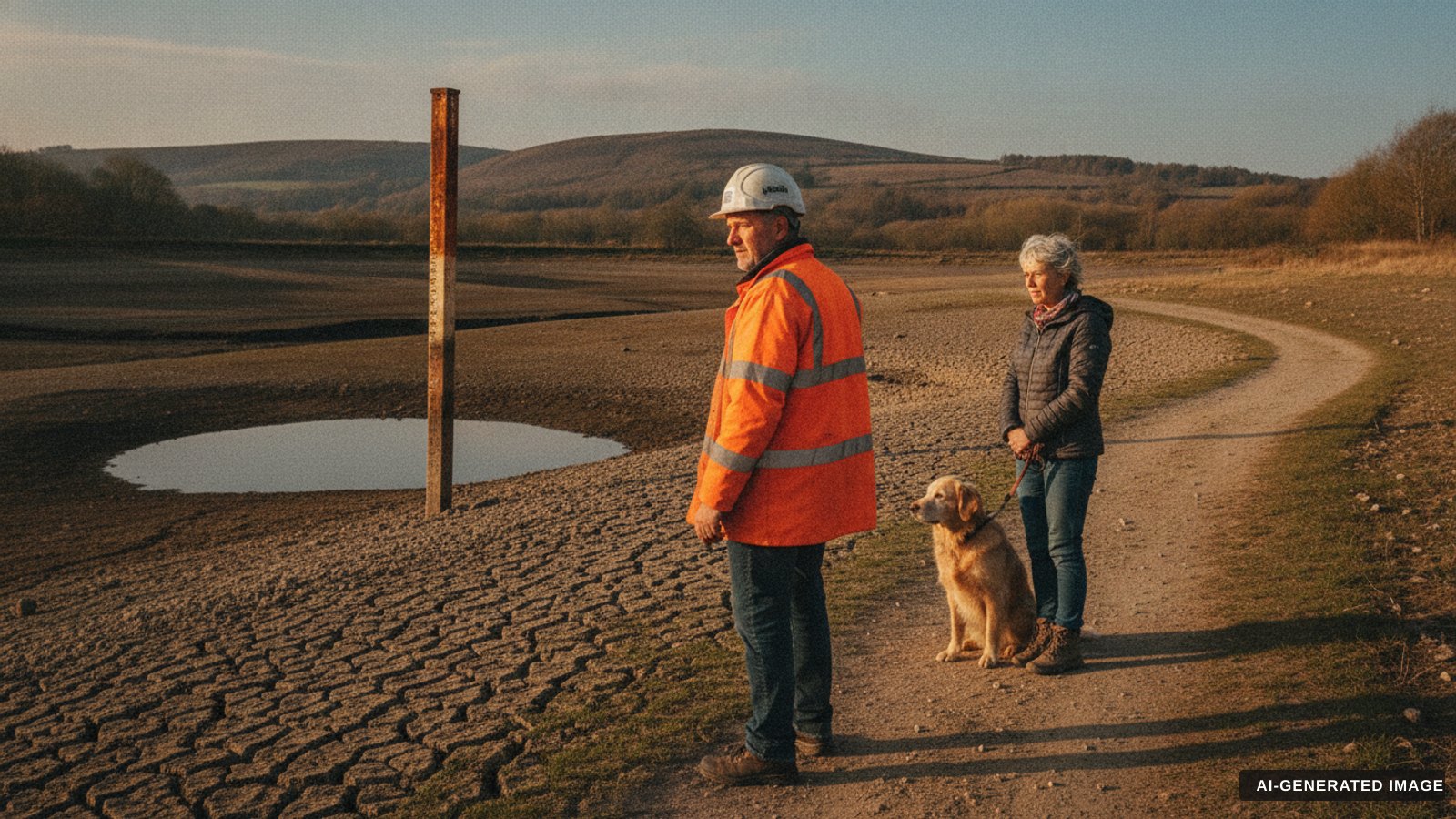
The UK Government declared severe drought on 15 October 2026 in parts of Cornwall, Devon, Dorset, Somerset, East Sussex and West Sussex, and told water companies in those areas to step up their drought planning. The Department for Environment, Food and Rural Affairs (Defra) said the South East and South West had their driest April to September in over a century.
Severe drought is the highest level of drought that can be declared, according to the Environment Agency, the body that regulates water resources in England. On 16 September the government and the agency said the country had not seen a severe drought since 1976 and put the chance of one in the coming months at around 1%.
Two reservoirs at the centre
The Environment Agency said in a blog post that the declaration covers homes and businesses served by two reservoirs, Ardingly in West Sussex and Wimbleball in Somerset, where public water supply is most at risk. The Independent, in a report republished by AOL, said Ardingly supplies about 95,000 properties served by South East Water and was at 19% of capacity, while Wimbleball, which serves about 300,000 South West Water and Wessex Water customers, was 16% full. Kai Times could not verify these figures with a primary source.
What the plan contains
Defra said customer water supplies will be uninterrupted and that the declaration ensures steps are taken before any disruption occurs. Ministers are instructing water companies to monitor reservoir and river levels daily and to carry out tougher water quality monitoring. The Environment Agency will increase compliance checks on businesses that take water from natural sources, and Local Resilience Forums have been stood up to develop support if required.
The Water Minister, Emma Hardy, has instructed the agency to prioritise public water supplies in the affected areas where there is “an unavoidable trade-off between environmental rules and water supplies”. Defra said this means allowing water companies to keep more water in depleted reservoirs.
The agency said severe drought does not automatically trigger restrictions and is not a civil emergency. Water companies in the affected areas may introduce further measures, which it said could include taking more water from the environment, limiting some business use, supply interruptions or reducing mains pressure.
Reactions
The Environment Secretary, Dame Angela Eagle, said: “This level of drought is something we have not experienced for decades, so this government is stepping up our support and planning.” The Environment Agency’s chief executive, Philip Duffy, said: “Recovery depends on both rainfall and how much water we use. We cannot change the weather, but water companies can act now.”
The announcement followed a meeting of the National Drought Group of government, regulators, water companies, farmers and others, which Defra said has been convened regularly since August.
Drought across England
The Environment Agency said on 15 October that 82% of England remains in drought. Its weekly report for 18 to 24 September listed 10 agency areas in drought, among them Devon, Cornwall and Isles of Scilly, Wessex, and Solent and South Downs. The same report said temporary use bans, formerly known as hosepipe bans, affected around 30 million people. The Independent reported that Yorkshire moved to drought status on 9 October. Kai Times could not verify this with a primary source; the agency’s report for 18 to 24 September still listed Yorkshire in prolonged dry weather.
The country had fully recovered from the previous drought by 23 March 2026, according to the agency. In September it said 120% of typical rainfall over the following seven months would be needed for all areas to be out of drought, and that in its most likely scenario Devon and Cornwall and East Anglia would still be in drought at the start of April 2027. Its blog post on 15 October said further dry weather is expected for the rest of October.
Defra said the government is investing £104 billion to upgrade water infrastructure and building nine new reservoirs. Neither Defra nor the Environment Agency said in their statements of 15 October when the severe drought status will be reviewed.
Sources (6)
- Government activates plan to protect consumers as severe drought declared in parts of England, Department for Environment, Food & Rural Affairs (GOV.UK), accessed 15 October 2026, accessed15 October 2026primary
- What is severe drought?, Environment Agency blog, accessed 15 October 2026, accessed15 October 2026official
- Government, Environment Agency, and water companies step up efforts to prevent England remaining in drought by next spring, Environment Agency and Defra (GOV.UK), accessed 15 October 2026, accessed15 October 2026official
- Dry weather and drought in England: 18 to 24 September 2026, Environment Agency (GOV.UK), accessed 15 October 2026, accessed15 October 2026official
- Drought: how it is managed in England, Environment Agency (GOV.UK), accessed 15 October 2026, accessed15 October 2026official
- Severe drought: What does it mean and where has it been declared in the UK?, The Independent via AOL, accessed 15 October 2026, accessed15 October 2026media
Comments
Anyone can comment, no registration needed. Comments are reviewed by an automated system before publication. Replies from the newsroom are written by artificial intelligence and labelled as such. Comment rules.
- Loading comments…
More from this sectionHome
UK government introduces bill imposing legal duty to fix unsafe cladding in England
Those responsible for residential blocks over 11 metres in England could be fined up to £500,000 for ignoring remediation orders